DEA Operations and Their Legal Implications on Fentanyl Trafficking Near Phoenix
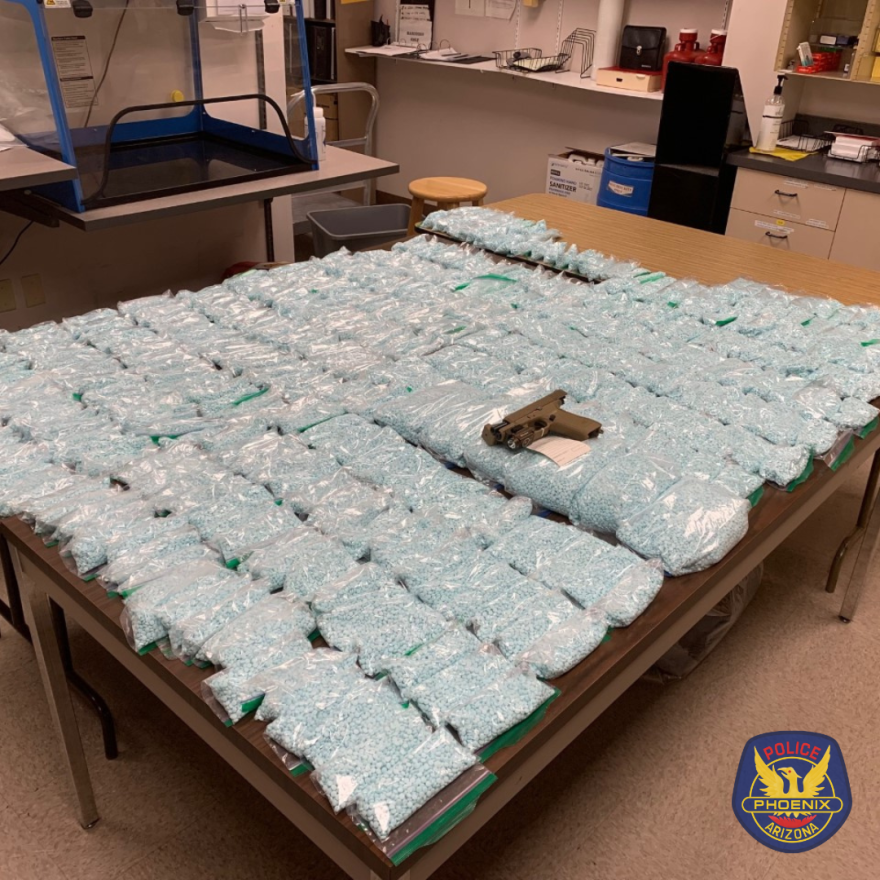
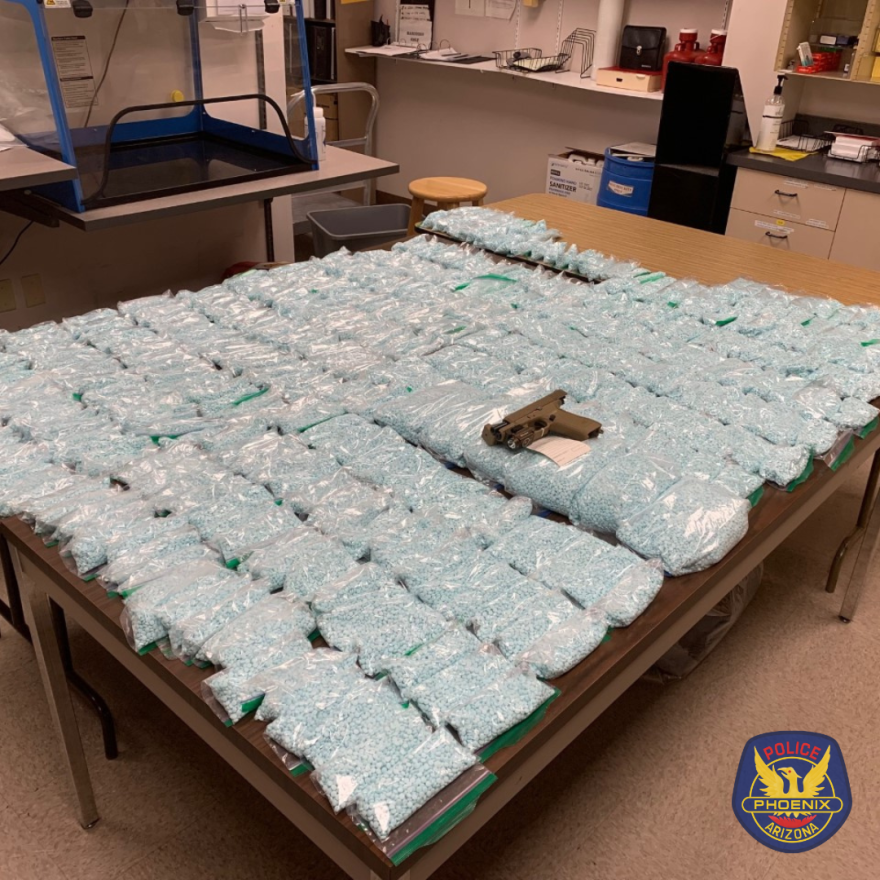
The recent arrest of two individuals in connection with an alleged attempt to sell approximately 40,000 fentanyl pills near the Phoenix airport has sparked significant discussion in legal circles and public policy debates. This case, which unfolded under the vigilant eyes of the Drug Enforcement Administration (DEA) and federal prosecutors, provides not only an opportunity to assess law enforcement strategies but also to examine the tangled issues of drug law, individual rights, and public safety. In this opinion editorial, we take a closer look at the fine points of the recent operation and address the broader challenges that arise in the fight against synthetic opioid distribution.
The operation, which led to the arrests of Trelayne Equaun Hodge and Gustavo Torres Manjarrez, is emblematic of decades-long battles fought on two fronts: the legal systems trying to bring traffickers to justice, and the communities striving to stay safe from the lethality of synthetic opioids. While many might see this as a straightforward law enforcement win, the case in question is loaded with issues that demand we dig into the legal tactics, the procedural steps, and the societal context.
Understanding the Legal Landscape of Controlled Substance Cases
At the heart of legal debates related to drug trafficking lies a range of tricky parts that lawyers, judges, and policy-makers must grapple with. The process begins well before the courtroom, with staged operations that involve undercover agents, informants, and meticulous investigations.
In this case, the DEA relied on a federal informant who initiated contact with Hodge, setting the stage for the operation. The informant played a key role by recording evidence that ultimately confirmed the presence of fentanyl pills. When Hodge reportedly indicated that the pills would be sourced from another party—later identified as Torres—the investigation took a decisive turn towards building a case that could withhold strong evidence in court. This is not without its nerve-racking moments as law enforcement officials piece together evidence while ensuring civil liberties are not breached.
It is essential to recognize that while such operations are designed to disrupt criminal networks, they also pose significant legal questions. These include:
- How should law enforcement balance the urgency of protecting communities with the requirement to uphold the rights of individuals under investigation?
- To what extent can informants’ testimonies and recorded evidence be considered reliable in a court of law?
- How does the chain of custody for evidentiary materials, such as the seized fentanyl pills, impact trial outcomes?
Understanding these issues means acknowledging that legal processes, especially in narcotics cases, are often full of problems that require carefully considering the evidence and methods used in undercover operations. If we get overly focused on results alone, we might overlook the subtle details that affect due process.
DEA’s Strategic Efforts and Community Impact
DEA operations like this one are not isolated events. Over the first half of 2025, federal data indicates that DEA agents have seized roughly 44 million fentanyl pills and over 4,500 pounds of fentanyl powder. This stark statistic underscores a relentless campaign by federal agencies aimed at dismantling drug trafficking networks.
From the perspective of legal policy and community safety, these actions have a dual impact. On one hand, they help curb the availability of a drug that is associated with high rates of overdose deaths. On the other, they open up debates about the use of aggressive tactics in undercover operations and the subsequent legal processes that follow.
DEA Acting Administrator Robert Murphy stated that “DEA is hitting the cartels where it hurts” with a combination of arrests and seizures meant to dismantle networks piece by piece. This perspective carries with it a mix of public safety triumph and daunting questions about the legal rights of suspects. It is important for legal commentators to address both the dividends and the dilemmas of such strategies in the broader debate over drug policy reform and law enforcement accountability.
Balancing Public Safety and Due Process
The balance between keeping communities safe and ensuring that every individual receives fair legal treatment is a pivotal legal battle. Law enforcement operations, particularly those involving controlled substances like fentanyl, are intense affairs that require close scrutiny of uncovering the entire chain of evidence while protecting the constitutional rights of the accused.
Key considerations include:
- The appropriateness of the methods used to gather evidence during covert operations.
- The potential for overreach by federal agencies when using informants and recording devices.
- Ensuring that the rights of the accused are not compromised in a rush to secure convictions.
These issues underscore the importance of procedural safeguards designed to protect defendants even as society benefits from decisive law enforcement actions. Critics argue that the aggressive tactics employed, though often effective, may sometimes blur the ethical and legal boundaries that are crucial for upholding the rule of law. As such, legal professionals must continue to take a closer look at how these measures align with constitutional guarantees.
Examining the Courtroom Process and Legal Precedents
Once suspects are arrested, as in the case of Hodge and Torres, the legal process enters a critical phase in U.S. District Court. The preliminary hearing, scheduled to occur soon after the arrests, represents not just a procedural step but an essential forum where evidence is scrutinized meticulously.
During preliminary hearings, a judge must decide whether there is sufficient evidence to charge the suspects formally. This stage is filled with nerve-racking moments for those involved. Legal teams for both the defense and the prosecution engage in back-and-forth arguments over the admissibility and interpretation of the evidence collected. These stages involve many twists and turns, often reflecting the hidden complexities that lie in the nitty-gritty of procedural law.
It is noteworthy that such hearings serve as an opportunity for legal experts to ensure that every identified piece of evidence—from the seized pills to the recorded conversation with the informant—is properly handled. The outcomes of these hearings often set legal precedents that may influence future operations against narcotics trafficking. Consequently, every detail is scrutinized, and even small distinctions in the handling of evidence can have significant ramifications in subsequent court rulings.
Legal Theory Versus Practical Enforcement
Legal theory and practical enforcement sometimes appear to be at odds. The legislative principles that govern controlled substance laws are designed to both punish criminal behavior and safeguard individual rights. However, when the urgency to dismantle drug-trafficking networks meets the rough-and-tumble world of undercover operations, we often witness a collision of theory with reality.
This divergence may be highlighted by several key factors:
- Evidence Collection Methods: The use of informants, recording devices, and covert surveillance are standard practices. However, defense lawyers may argue that these methods encroach upon privacy rights or rely on evidence that is too remote in its chain of custody.
- Speed of Operations: The rapid nature of infiltrating criminal operations is sometimes seen as necessary in preventing imminent harm to communities. Yet, this speed can also lead to mistakes that might later be challenged in a courtroom.
- Judicial Oversight: Courts serve as the ultimate arbiters of whether law enforcement tactics meet the standards set by the Constitution. The process of judicial oversight reinforces the delicate balance of preserving public safety while protecting civil liberties.
In these ways, the current case serves as both a litmus test for current law enforcement strategies and a blueprint for future legal reinterpretations related to drug trafficking cases. Legal scholars and practitioners alike must continue to refine the ways in which practical enforcement techniques align with constitutional safeguards.
Evaluating the Impact of Synthetic Opioids on Public Health and Safety
Fentanyl, as a synthetic opioid, poses dire risks to public health and safety. Despite a reported decline in overdose deaths after December 2023, fentanyl remains a central factor in the ongoing opioid crisis. In 2024, it was involved in more than 80,000 overdose deaths — a statistic that illuminates the overwhelming challenges faced by law enforcement and public health officials alike.
The seizure of millions of fentanyl pills and thousands of pounds of fentanyl powder is directly linked to attempts to intercept harmful substances before they reach communities. The data released by the Department of Justice emphasizes not only the scale of the distribution problem but also the vast network of cartels and other criminal organizations involved in synthetic opioid trafficking.
At the center of this complex problem is a harsh reality: fentanyl can be deceptively lethal. The spectrum of risk associated with these drugs demands that law enforcement continue its efforts, while legal experts engage in meaningful discussions about the most effective ways to manage and mitigate these risks. It is a balancing act—ensuring public safety without sacrificing procedural fairness—that has become emblematic of modern drug enforcement challenges.
The Role of Data in Shaping Legal Policy
Data plays a critical role in shaping how legal and law enforcement policies are formulated in response to drug trafficking. The sheer volume of seized fentanyl pills, for instance, offers insights not only into the operational success of the DEA but also into the evolving tactics of drug cartels attempting to infiltrate communities with dangerous substances.
A table below outlines a comparison of key data points from recent DEA operations:
| Metric | First Half of 2025 | Previous Period Comparison |
|---|---|---|
| Fentanyl Pills Seized | Approximately 44 million | Data indicates a significant increase over past years |
| Fentanyl Powder Seized | Over 4,500 pounds | Thousands of pounds, showing an upward trend |
| Number of Arrests (High-profile) | Multiple significant busts | Increased emphasis on high-value targets |
This data not only supports the argument for continued aggressive enforcement but also calls for regular reassessments of legal policies. Lawmakers must stay in tune with the small distinctions in the data, and legal experts need to interpret these details to refine laws that govern controlled substances.
Community Reactions and the Broader Debate on Drug Policy Reform
The public response to high-profile arrests such as those near Phoenix has been mixed. While many community members welcome strong law enforcement actions that promise enhanced public safety, others express concerns about the potential for abuses of power and the negative impact on civil liberties.
Within community forums and legal debates, several points of contention often emerge:
- Community Safety: Local residents tend to support efforts that remove dangerous drugs from circulation. The swift action taken by the DEA is frequently cited as essential in preventing overdose tragedies.
- Civil Liberties: Advocates for civil rights argue that aggressive law enforcement operations, especially those involving undercover tactics, might inadvertently overstep boundaries and compromise individual rights.
- Long-Term Solutions: There is a growing call for addressing the root causes of drug abuse—such as economic disparity and lack of access to mental health care—instead of relying solely on arrests and seizures.
Legal scholars stress that the debate over drug policy reform is not simply about reducing the supply of synthetic opioids. It is equally about managing the side effects that come with heavy-handed enforcement. In communities where trust in law enforcement is thin, every operation must balance the promise of safety with the need for transparency and accountability.
Considering Alternatives: Rehabilitation Versus Incarceration
It is also worth considering the broader context of drug policy in shaping public opinion and legal reform. Critics of purely punitive measures suggest that a heavy reliance on arrests and incarceration neglects the underlying social issues that contribute to drug abuse. In recent years, several alternative approaches have been proposed—including enhanced drug rehabilitation programs, community outreach initiatives, and more robust public health interventions.
The alternatives can be summarized as follows:
- Rehabilitation Programs: Focusing on treatment rather than punishment for drug abuse can reduce recidivism and support community reintegration.
- Community-Based Interventions: Engaging local organizations to provide education, support, and preventive care helps address drug issues at the grassroots level.
- Public Health Initiatives: Policies aimed at reducing overdose deaths through harm-reduction strategies—such as naloxone distribution—are critical in mitigating the adverse effects of synthetic opioids.
Legal analysts agree that the fine balance between enforcement and reform must be maintained. Law enforcement actions serve an essential role in curbing the distribution of dangerous drugs; however, without complementary reforms in public health and social services, efforts to control drug-related harm can fall short of their intended goals.
The Impact of Federal Operations on Local Jurisdictions
While federal agencies like the DEA pave the way with high-profile operations against drug trafficking, the ripple effects are inevitably felt at the local level. Observers note that the intersection of federal and local law enforcement efforts is a nuanced arena, where state laws, local customs, and federal guidelines often overlap—and sometimes conflict.
Local jurisdictions in and around Phoenix have experienced the immediate impact of federal operations. Positive outcomes include increased public awareness and an immediate reduction in the availability of fentanyl on local streets. Conversely, critics worry about over-policing and the potential for strained relations between community leaders and federal agencies.
A detailed look at these issues reveals several notable points:
- Federal-Local Coordination: Collaborative operations are crucial for effective enforcement. However, they can also create situations where jurisdictional boundaries become confusing, characterized by small twists and subtle details that affect how cases are ultimately prosecuted.
- Impact on Local Courts: With more high-profile federal cases being funneled into local courts, judges are often burdened with balancing rapid enforcement with ensuring procedural fairness.
- Community Trust: Maintaining a positive relationship between law enforcement and the community is essential. When operations are perceived as overzealous or lacking transparency, public trust can be negatively affected.
Local law enforcement agencies are continuously learning how to steer through these areas, ensuring they work seamlessly with federal partners while addressing the direct needs of their communities. The fine balance between centralized, federal action and decentralized, local oversight remains a critical point of discussion among legal professionals and community advocates alike.
Considering the Broader International Impact of U.S. Drug Policy
It would be incomplete to discuss U.S. drug policy without acknowledging its international dimensions. The operations against fentanyl trafficking in the United States are part of a global battle against synthetic opioids—a fight that involves multiple nations and complex transnational networks.
Cross-border issues further complicate the legal framework. For example, the collaboration between U.S. agencies and international partners has intensified in recent years, aiming to dismantle networks that smuggle controlled substances across borders. The case near Phoenix is a prime example of how domestic operations can have broader international reverberations.
This global dimension involves several legal and operational challenges, including:
- Extradition Treaties: Legal procedures to extradite suspects captured in one country to face trial in another require delicate negotiation and adherence to international law.
- Cross-Border Surveillance: The sharing of intelligence and the cooperation between agencies across different jurisdictions are essential, yet they are accompanied by complicated pieces of legal red tape that require constant attention.
- Global Policy Coordination: Harmonizing domestic drug policies with international treaties and agreements is loaded with issues, especially as synthetic opioids continue to evolve and infiltrate markets worldwide.
International legal scholars argue that as long as fentanyl and similar substances remain globally prevalent, U.S. drug policy must adapt to these international challenges. Efforts by agencies like the DEA not only focus on local arrests but also contribute to shaping international standards and cooperation protocols. In many ways, the case near Phoenix serves as one of the many nodes in a far-reaching network that spans continents and requires continuous legal negotiation and innovation.
Reflecting on the Balance Between Enforcement and Reform
The discussion surrounding DEA operations, such as the recent fentanyl case, compels us to ponder the broader implications of a heavily enforced legal framework. While it is undeniably appealing to applaud the swift actions taken by federal agencies in their battle against synthetic opioids, we must remain mindful of the broader legal and societal costs.
Several thought-provoking issues arise when we attempt to balance robust drug enforcement with effective legal reform:
- The Scope of Federal Intervention: There is inherent tension in how much power should be delegated to federal agencies in drug-related matters. While decisive action is critical to combat the immediate dangers posed by substances like fentanyl, unchecked power can lead to situations where constitutional rights might be sidelined.
- Long-Term Solutions Versus Short-Term Wins: The seizures and arrests represent short-term victories against illicit drug trade. However, without addressing underlying social problems that feed the epidemic—such as mental health issues, economic stressors, and social isolation—these operations may merely serve as a temporary fix.
- Legal Precedents and Future Operations: Every operation sets a precedent. The methods employed, the chain of custody of evidence, and the interplay between federal and local agencies will all contribute to shaping future policies. These legal precedents can have a cascading effect, influencing both domestic and international drug enforcement strategies.
Policy experts emphasize that a sustainable approach to drug control must include cooperation between law enforcement and public health initiatives. It is super important that reforms focus on both interdiction of dangerous drugs and creating robust systems for rehabilitation and community support. As legal commentators, we must continue to advocate for a balanced approach—one that counters the immediate threats without neglecting the long-term goals of social stability and justice.
Future Directions in Drug Policy and Legal Reforms
The case of Hodge and Torres is unlikely to be an isolated event. As synthetic opioid trafficking continues to evolve, so too must our legal frameworks and enforcement strategies. Looking ahead, several key areas demand attention:
- Enhanced Judicial Oversight: It is essential for judges to have clear guidelines on what constitutes acceptable methods in undercover operations. This oversight must help ensure that rapid enforcement does not lead to errors or violations of defendants’ rights.
- Investments in Community-Based Interventions: Beyond law enforcement, local communities need substantial support in the form of mental health facilities, education programs, and economic initiatives that address the root causes of drug abuse.
- International Collaboration Protocols: As fentanyl and other synthetic opioids cross borders, international legal frameworks must be harmonized to facilitate smoother cooperation between nations. Policy makers need to focus on building robust partnerships that can handle the fine shades of cross-border crime.
- Innovative Surveillance and Evidence Collection Techniques: Technological advancements must be carefully integrated with legal practices. The integration of digital tools should enhance evidence collection without compromising civil liberties. Law enforcement must continue to work on making these processes as transparent and accountable as possible.
By examining these areas for improvement, legal professionals and law enforcement agencies can work together to create strategies that are both effective in reducing the supply of dangerous drugs and resilient in the face of legal challenges. The lessons learned from recent operations near Phoenix can guide reforms that will strengthen the overall integrity of our legal system.
Roadmap for Legal and Policy Reform
Below is a roadmap summarizing potential future reforms:
| Area of Focus | Proposed Reforms |
|---|---|
| Judicial Oversight |
|
| Community-Based Initiatives |
|
| International Collaboration |
|
| Technological Integration |
|
This roadmap highlights the multifaceted nature of the ongoing challenge. Each step taken must be carefully weighed against both the immediate need for public safety and the long-term imperatives of legal fairness and social equity.
Conclusion: The Way Forward Amid Challenging Circumstances
In wrapping up this discussion, the arrest of two men connected to an alleged fentanyl trafficking plot near Phoenix airport is a microcosm of broader tensions in our legal system. On one hand, it demonstrates the impressive scope of federal efforts to disrupt dangerous networks—seizing millions of lethal pills and dismantling parts of a vast criminal ecosystem. On the other, it lays bare the nerve-racking challenges of conducting undercover operations that are at once effective and constitutionally sound.
As legal professionals, we must continue to poke around the underlying issues and engage with the full spectrum of arguments—from strict enforcement to calls for broader reform. The case serves as a call to action: we need to think critically about both present dangers and future solutions. Community safety, legal integrity, and international cooperation are all essential elements that together form a strategy robust enough to tackle the ever-changing landscape of synthetic opioid trafficking.
By working through confused bits of evidence collection, navigating tangled issues in the courtroom, and reconciling theoretical legal frameworks with practical enforcement, policymakers and law enforcement officials can develop approaches that are both effective and just. It is super important for every stakeholder to stay engaged in this ongoing dialogue. Only by doing so can we hope to protect communities while preserving the rights and freedoms essential to our constitutional identity.
Ultimately, the challenges associated with fentanyl trafficking are not simply legal problems to be solved with arrests and seizures. They are a call for a deeper reexamination of how society manages the knife-edge balance between public safety and individual liberty. As we figure a path forward, let us remember that every piece of evidence, every legal precedent, and every policy decision matters immensely in shaping a future where justice and community wellbeing go hand in hand.
In conclusion, while the immediate outcomes of operations like the one near Phoenix may appear as swift wins against dangerous cartels, the legal community must commit to a nuanced and thoughtful approach. This includes maintaining transparency, reinforcing judicial safeguards, and pursuing complementary reforms in public health and social services. Stepping into the future, we are reminded that every legal decision has the potential to pave the way for a safer, more balanced society—one where every pill, no matter how small, is recognized for its potentially deadly impact.
Originally Post From https://www.latintimes.com/dea-arrests-two-alleged-plot-sell-40000-fentanyl-pills-near-phoenix-airport-586870
Read more about this topic at
Largest Fentanyl Bust in DEA History: Authorities Seize …
Sen. Ossoff’s Bipartisan Bill to Crack Down on Fentanyl …