Federal Intervention or Local Autonomy? Understanding Trump’s Warning
The recent threat by former President Donald Trump to once again place Washington, D.C.’s police force under federal control has sparked a lively debate about local autonomy versus federal oversight—especially when it comes to immigration enforcement issues. Trump’s warning comes as a response to the local mayor’s decision not to continue cooperating with Immigration, Customs and Enforcement (ICE). In his early morning social media post, Trump suggested that without such cooperation, he could resort to calling a National Emergency and federalizing the local police if necessary. This article will explore the background of this confrontation, examine the data presented by both sides, and look at the political and legal challenges that lie ahead.
It is worthwhile to note how this controversy is steeped in the history of federal interventions in local law enforcement. The decision to impose federal control over a city police force is not taken lightly; rather, it represents a turning point where federal powers collide with locally determined priorities. In addition, Trump’s tone—marked by a promise of drastic measures—reflects his long-standing stance on immigration as a tool for combating what he perceives as high crime rates. However, it is crucial to take a closer look at the evidence that supports claims regarding crime reduction and whether such achievements can be directly ascribed to federal oversight.
Trump’s Previous Federal Control: A Look at the Last Emergency Order
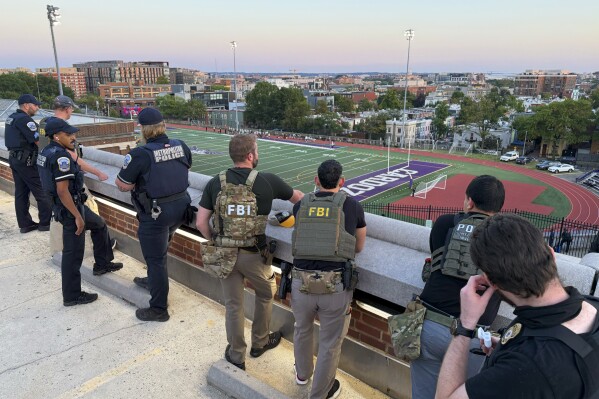
Before this new pronouncement, President Trump’s emergency order had temporarily transferred control of Washington, D.C.’s Metropolitan Police Department (MPD) to federal agencies. Although Trump credited this move with bringing down crime rates, analysis by the media has shown that crime was already on the decline even before the surge of federal law enforcement personnel. While some argue that this intervention helped accelerate a positive trend, others suggest that the data does not conclusively prove a causal link.
A Timeline of Federal Oversight in D.C.
The following table summarizes key moments during the previous federalization period and their outcomes:
| Date | Event | Outcome |
|---|---|---|
| Early September 2025 | Emergency order implemented; local police placed under federal oversight | Initial decrease in reported crime rates |
| Mid-September 2025 | Local Mayor Bowser declares DC will not cooperate with ICE | Tension rises between federal authorities and local government |
| September 11, 2025 | Order expires as Congress does not renew it | Transition back to local control begins |
This table provides an overview of the timeline and its effects, illustrating that the federal control was short-lived and that the local government is re-establishing control over its police department.
Local Leadership’s Perspective: Mayor Bowser’s Stand on Immigration Enforcement
Mayor Muriel Bowser of Washington, D.C., has been particularly clear about her administration’s goals regarding immigration enforcement. In a speech delivered during a ribbon-cutting ceremony, she emphasized that immigration enforcement is not part of the core mission of the local police. According to her, once the emergency order expires, the MPD would not continue to engage in immigration-related arrests to the same extent.
Key Points from the Local Administration
- The local government asserts that the MPD is primarily responsible for community safety, not for executing federal immigration policy.
- Mayor Bowser has signaled a commitment to work with federal agencies that address other forms of crime, such as the FBI, Drug Enforcement Administration, and the Secret Service.
- Local leadership is wary of having police resources diverted to immigration enforcement, which they argue could strain community relations and distract from addressing other public safety issues.
By taking a stand against deepening federal influence in local policing, the city’s leadership is trying to maintain its identity and priorities. Many residents view the mayor’s decision as a pushback against what they see as overreach by the federal government, ensuring that local law enforcement remains focused on the community’s immediate needs and safety.
Dissecting Crime Data and Immigration-Related Arrests
Both the Trump administration and local officials refer to crime statistics to bolster their arguments. On one hand, data analyzed by the Associated Press showed that a significant portion—more than 40%—of arrests during the federal control period were related to immigration offenses. On the other, it is argued by some that the overall decline in crime was not solely due to immigration enforcement but also influenced by other factors already at play in the community.
Understanding the Data Behind the Decisions
When looking at crime data, it is important to account for the following tricky parts:
- Timing: Crime was trending downward even before the federalization of local law enforcement.
- Focus of Arrests: A large number of the arrests during the emergency period were immigration-related, which suggests that federal priorities were different from those of local law enforcement.
- Community Perception: Many residents initially perceived an improvement in public safety, even if the underlying causes were complex and possibly driven by external factors.
In order to get around the confusion regarding these statistics, analysts have continued to compare data from periods before, during, and after the federal control. Such comparisons help in identifying whether there was a direct impact attributable solely to federal intervention or whether other variables influenced the outcomes observed.
Political Implications and the Legal Landscape
The current standoff is not only about police operations but also about the balance of power between different levels of government. With Congress having allowed the previous emergency order to lapse and local leaders asserting greater independence, Trump’s recent threat to reinstate federal control introduces a series of political, legal, and constitutional challenges.
Examining the Fine Points of Federal versus Local Jurisdiction
A key question arises: To what extent can the president intervene in local law enforcement matters? This issue brings up several little details that have significant implications:
- Constitutional Authority:
- The president possesses emergency powers but must operate within the limits defined by both the Constitution and prior legal precedent.
- Local governments, by contrast, have established autonomy, particularly in municipalities like Washington, D.C., which has home rule limitations yet retains a certain degree of self-governance.
- Congressional Oversight:
- Congress plays a crucial role in the renewal (or discontinuation) of emergency orders. The decision not to renew the previous order highlights the legislative branch’s influence on local federal interventions.
- Any new move to reassert federal control would likely prompt legal challenges and debates over executive overreach.
- Precedent and Future Implications:
- Establishing yet another instance of federal control might set a precedent that could be used by future administrations in politically charged environments.
- The potential misuse of emergency powers could lead to long-lasting tensions between federal authorities and locally elected officials.
Community Safety Versus Broad Immigration Policy
At the heart of this debate is the question of community safety and the effectiveness of immigration enforcement as a tool for reducing crime. Critics argue that heavy-handed federal interventions do not necessarily lead to safer neighborhoods and can, in fact, create more divisions within the community.
Small Distinctions in Policy and Public Opinion
Some of the subtle parts that need to be considered include:
- Impact on Community Trust:
Local law enforcement agencies serve as the face of government in many communities. When they are seen as extensions of federal immigration policy, trust can erode. Residents might then be less inclined to cooperate with police on other matters, which could undermine overall public safety.
- Resource Allocation:
If too many local resources are dedicated to immigration arrests, other areas of criminal activity might not receive the attention they require. This misallocation can lead to an imbalance where minor issues are prioritized over more pressing crimes.
- Broader Social and Economic Impacts:
The fear of federal intervention can have a chilling effect on immigrant communities, potentially driving a wedge between residents and their local authorities. This tension can harm community cooperation, which is essential for effective crime prevention and neighborhood safety.
In many ways, the debate is less about numbers and more about how policies are perceived and experienced on the ground. The idea that strict immigration enforcement automatically translates into safer streets is not a simple one. Instead, it calls for a deeper consideration of the trade-offs involved in reassigning local police resources to broader federal initiatives.
The Role of Political Rhetoric in Shaping Public Opinion
Political messaging plays a significant role in how these issues are interpreted by the public. Trump’s assertive stance—reminiscent of his earlier promises—serves to galvanize his base, while simultaneously causing alarm among those who favor local autonomy. The language used by both sides is carefully crafted to appeal to different constituencies, and the resulting controversy is charged with political symbolism.
Key Messaging Strategies and Their Effects
Below are some of the critical elements that define the political rhetoric surrounding the issue:
- Emphasis on Safety:
Trump often underscores that his intervention has led to lower crime rates. Whether or not the data fully supports this claim, the image of a safer city under federal oversight is a powerful selling point for his supporters.
- Assertion of Control:
For local leaders, asserting control over the MPD is a way to ensure that community needs remain paramount. By distancing themselves from federal immigration priorities, they aim to reassure residents that local safety, rather than political maneuvering, is guiding law enforcement policies.
- Polarization in Messaging:
The language on both sides is often charged with emotion. Terms like “national emergency” and “federal takeover” evoke feelings of being either rescued from chaos or coerced into losing local control. These narratives can be both unifying for one group and divisive for another.
Legal Challenges: Weighing Executive Power Against Municipal Rights
Any discussion of federal intervention must grapple with the interesting legal twists and turns that arise when a president and a local government have competing visions for public safety. Much of the legal debate centers on the limits of executive power in times of emergency and the applicable constitutional boundaries.
The Subtle Legal Details at Play
Some of the complicated pieces in this legal puzzle include:
- Scope of the President’s Emergency Powers:
While presidents have considerable authority during emergencies, that power is not unbounded. Decisions on whether to extend or re-impose federal control must contend with existing laws that protect local governance.
- Judicial Oversight:
Any attempt to federalize local police forces against the wishes of local authorities could trigger immediate legal challenges. Courts may need to settle disputes that revolve around the precise boundaries of executive authority.
- Legislative Response:
Congress has the ultimate power of the purse and can influence how emergency powers are applied. The failure to renew a previous order underscores a willingness among lawmakers to rein in executive overreach.
Understanding the Broader Implications for Federalism in America
This episode is a stark reminder of the delicate balance between federal oversight and the rights of local governments—a balance that is at the very core of American federalism. The tension between ensuring national security and respecting local traditions is an age-old debate in U.S. politics.
Fine Shades of Federalism and Local Decision Making
Some of the small distinctions that highlight the broader debate include:
- Historical Precedents:
Throughout U.S. history, there have been instances where the federal government has stepped in to manage local affairs during times of crisis. Each of these moments has sparked controversy and set new precedents for the limits of presidential power.
- Cultural and Social Expectations:
Local communities often expect that their elected leaders will reflect and protect local values. When federal intervention is introduced, it is seen by some as not only an encroachment on local rights but also as an imposition of distant values that may not align with community needs.
- Impact on Future Policy:
How this situation resolves itself could have long-lasting effects on the balance of power in the United States. A ruling in favor of federal intervention might encourage future administrations to seize on similar tactics under different circumstances.
Public Safety and Economic Considerations in Immigration Policy
The debate surrounding federal immigration enforcement and local law enforcement priorities is also intricately linked with broader socioeconomic considerations. Critics point out that while the intention behind these interventions might be to reduce crime, there are potential economic and social costs associated with the loss of community trust and the misallocation of limited police resources.
Key Economic and Social Factors Under Discussion
In order to carefully figure a path through these topics, it is useful to consider the following points:
- Community Relationships:
Strong ties between local police and community members are essential for effective policing. Disruptions caused by political mandates can lead to a decline in mutual trust, which is critical for solving and preventing crimes.
- Budget Priorities:
Resources that might be used to address violent crime or other public safety concerns can, instead, be diverted to administering federal immigration priorities. This shift might have adverse consequences for overall community security.
- Social Cohesion:
Heavy-handed immigration enforcement can create divisions in communities that are already sensitive due to phraseology and policy differences. A balanced approach is seen by many as essential for maintaining social stability.
Looking into the Future: Scenarios for Washington, D.C.
Given the backdrop of political tensions, legal debates, and social implications, what does the future hold for Washington, D.C.? Many experts believe that while the threat of renewed federal control is real, actual implementation would likely face both judicial and legislative hurdles. The city’s mayor has already laid out a plan to foster cooperation with selected federal agencies while maintaining a clear boundary regarding immigration enforcement.
Possible Outcomes and Their Implications
Below is a breakdown of some of the potential scenarios that could evolve over the coming months:
| Scenario | Implication for Local Governance | Impact on Community Safety |
|---|---|---|
| Reinstated Federal Control | Local authorities lose a degree of operational independence | Potential short-term decline in localized trust, with ambiguous long-term crime outcomes |
| Continued Local Autonomy | Mayor Bowser’s policies remain in place, with selective federal cooperation | Maintained community trust if local priorities are respected |
| Hybrid Approach | A negotiated framework where local and federal agencies share responsibilities | Possibility of improved coordination but risk of blurred accountability lines |
In each scenario, there exist further fine shades and small twists in the debate. The legal battles that might arise, combined with the political rhetoric on both sides, suggest that any resolution will be a product of negotiated compromise rather than dramatic unilateral action.
Media, Public Perception, and the Role of Political Debate
The way the media covers this issue can also influence public perception and, ultimately, the political outcomes. Media outlets tend to highlight the more nerve-racking and intimidating aspects of federal intervention—emphasizing fear of losing local control, and at times, presenting a skewed picture of crime statistics.
How Political Debate Shapes the Narrative
Consider the following factors that contribute to the current public sentiment:
- Selective Reporting:
Certain media outlets may focus on isolated data points, such as the percentage of immigration-related arrests, without providing broader context.
- Political Spin:
Rhetoric on both sides is designed to evoke emotional responses—from rallying support to stoking fears—without necessarily offering a balanced analysis of the complicated pieces of the policy challenge.
- Community Voices:
Interviews with local residents often reveal a mix of opinions; while some support stricter measures for fear of rising crime, others view excessive federal involvement as a threat to community unity.
Conclusion: Balancing Local Needs with Federal Oversight
Ultimately, the debate over Trump’s threat to re-federalize Washington, D.C.’s police force is emblematic of a broader struggle between different layers of American governance. On one hand, federal authorities seek to enforce a national immigration policy that they believe is essential for reducing crime. On the other, local leaders argue that the city’s police should focus on issues that directly affect the community’s day-to-day safety and well-being.
Final Thoughts on the Path Forward
In considering future developments, several key points emerge that are super important for understanding the situation:
- It is critical that any changes in control are based on a transparent analysis of available data rather than solely on political rhetoric. The evidence suggests that while federal intervention may come with some benefits, it also carries significant risks to local trust and community cohesion.
- Local authorities, such as Mayor Bowser, have a challenging task ahead as they figure a path between resisting overreach and cooperating with federal agencies on issues where their expertise and community connections are necessary.
- Ultimately, resolving this dispute will require a balanced approach that respects both the strategic needs of national governance and the must-have local expertise that ensures public safety remains a community-centered effort.
This debate is neither black nor white—it is laden with complicated pieces, tangled issues, and the inevitable twists and turns of American politics. As political leaders from all sides continue to attack, defend, and negotiate, one thing is clear: the relationship between local autonomy and federal power will remain a contentious and evolving frontier for years to come.
While Trump’s warning is undoubtedly dramatic and designed to capture attention, its real impact will depend on the ability of legal institutions, political negotiators, and community leaders to work through the nerve-racking tension created by this confrontation. Whether through renewed federal control, maintained local oversight, or a hybrid approach, finding a way to balance all considerations is essential for the long-term safety and prosperity of Washington, D.C.
Originally Post From https://ktar.com/national-news/trump-threatens-to-take-over-dc-police-again-over-immigration-enforcement/5750560/
Read more about this topic at
Trump threatens to federalize D.C. police again if the …
Trump threatens national emergency to force Washington …