Deployment of National Guard Troops in Washington: A Critical Analysis
The recent decision by three Republican-led states to send hundreds of National Guard members to Washington, D.C. marks a significant turning point in the ongoing federal intervention in the nation’s capital. As we take a closer look at this development, we must examine the legal boundaries, political motivations, and societal implications that come into play when state governments actively support a federal strategy aimed at overhauling local policing practices. Such measures, including President Trump’s executive order to federalize local police forces, have stirred heated debates among legal experts, local leaders, and the general public alike.
This op-ed seeks to offer a detailed and balanced analysis of the issue by breaking down the tricky parts, tangled issues, and subtle details that surround the deployment of National Guard troops. In doing so, we will dig into the legal framework, consider the role of state and federal authority, and assess the potential impact on American democracy. Throughout this discussion, we will use language designed to clarify rather than complicate, so our expert legal analysis remains accessible to a broad audience.
Federal Intervention and the Legal Framework
Understanding the Legal Foundations of Federal Overreach
President Trump’s recent actions have once again highlighted the ongoing tension between federal authority and local control. The deployment of additional National Guard troops—beyond the initial 800 already activated in the District of Columbia—underscores a power grab that some critics argue is intended to assert even tighter control over Washington. Legally, the executive branch is granted certain emergency powers; however, questions arise when these powers are used to override the established local system of governance. This is particularly pertinent when the actions taken are justified under the auspices of addressing crime and homelessness, conditions that many local officials say do not warrant such dramatic federal overreach.
The heart of the legal debate centers on whether an emergency indeed exists that allows the president to commandeer local security forces and sidestep democratic procedures inherent to cities like Washington, D.C. City leaders have protested these measures, not simply as a matter of principle but because of the tangible effects on local governance and civil liberties. When federal law enforcement and National Guard members patrol the streets, landmarks, and neighborhoods, the clear line between federal support and local jurisdiction becomes increasingly blurred.
Examining Constitutional Constraints and State Contributions
The constitution sets out key limits on federal power, and any measure that expands that power must be scrutinized carefully. The initiative to deploy additional troops from West Virginia, South Carolina, and Ohio opens a Pandora’s box of legal questions, such as:
- Do these deployments adhere to the separation of powers envisaged by the Constitution?
- What rights do Washington, D.C. residents have when external military personnel become involved in local law enforcement?
- How might state and local legal frameworks clash when orders come down from the top?
While the governors of West Virginia, South Carolina, and Ohio have expressed pride in their decision to support the president’s initiative—claiming their actions are in service of restoring order and pride to the nation’s capital—these moves raise significant legal issues. The tension between state-led initiatives and federal mandates invites scrutiny from multiple quarters: constitutional experts worry about the erosion of local self-governance, while civil liberties advocates argue that practical safeguards against federal overreach are critically undermined.
Political Implications and the Bigger Picture
State Politics and Federal Mandates: Balancing Act or Power Play?
The decision by the states involved represents more than a simple security measure. It is a politically charged moment, laden with symbolism and intent. West Virginia’s governor, Patrick Morrisey, South Carolina’s governor, Henry McMaster, and Ohio’s governor, Mike DeWine have all signaled a resolute commitment to the Trump administration’s objectives. Their contributions are seen by supporters as bolstering a robust federal effort to address public order concerns; by opponents, these actions appear as part of an overarching power play intended to cement centralized control over a historically independent capital.
Critics argue that the injection of outside military force into Washington is not merely about handling crime or homelessness but represents a deeper ideological struggle. The imposition of federal law enforcement tactics in a predominantly Democratic city illustrates a clear departure from the usual norms of local control. This controversial move must be viewed in the context of an increasingly polarized political environment—in which decisions are often interpreted through the lens of partisan loyalty rather than objective legal necessity.
Impact on Local Governance and the Role of the Mayor
Washington, D.C., with its unique status as a federal district, has always faced limitations in its self-governance. However, Mayor Muriel Bowser and other local leaders now face unprecedented challenges as they attempt to balance their responsibility to protect local interests with the obligations imposed by federal law. In her public statement, Mayor Bowser stressed unity among the residents and a commitment to standing up for democratic principles, even as the city’s limited autonomy is increasingly under siege by orders stemming from Washington’s corridors of power.
This push and pull between local governance and federal mandates create an environment in which the fine points of legal authority are constantly in flux. As legal scholars continue to analyze the implications, many are left to wonder whether this is a temporary moment of crisis or a harbinger of more permanent changes in how federal and local powers interact. The long-term impact on urban governance and community policing strategies could be profound, extending well beyond the immediate news cycle.
Public Safety Versus Civil Liberties: The Debate Unfolds
Reassessing the Emergency Justification
When President Trump declared an emergency, he argued that the situation in Washington was dire due to escalating crime and rampant homelessness. However, local crime statistics suggest that violent crime rates are actually lower than they were during his first term. This discrepancy prompts one to ask: are the justifications for deploying additional troops genuinely rooted in public safety, or are they being used as a pretext for broader political aims?
Critics contend that the narrative of a lawless capital is oversimplified and not fully supported by the data. The use of emergency powers should be measured carefully, with transparent criteria that address the real challenges on the ground rather than serving as a convenient cover for political maneuvering. The awkward bits of federal law enforcement oversight have triggered alarm among residents, who fear that the blending of federal, state, and local security operations might lead to an erosion of civil liberties—a perspective that deserves thoughtful consideration.
The Balancing Act: Maintaining Public Order While Respecting Rights
One of the central dilemmas in this debate is how to effectively ensure public safety without infringing upon the basic rights of citizens. As federal agents and National Guard members increase their presence in Washington’s neighborhoods and around key landmarks like the National Mall and Union Station, there arises a critical need for clarity regarding their roles and responsibilities.
This balancing act involves several key considerations:
- Clear Authority: Defining the limits of federal intervention ensures that local authorities can still exercise their traditional roles. Without clear boundaries, there is a risk that the added presence of external forces could lead to inconsistent enforcement practices and confusion over who holds ultimate responsibility.
- Protection of Free Speech: Increased law enforcement activity has raised concerns among residents and protestors alike. When military personnel are involved in crowd control, the risk of unintended consequences—such as infringing on the rights of demonstrators—grows significantly.
- Community Trust: Effective policing strategies depend heavily on the trust between law enforcement agencies and the communities they serve. An overbearing federal presence might undermine that trust, leading to long-term damage in community relations.
Local experts and community leaders caution that a careful examination of these elements is critical. It is not enough to simply assert that more troops mean more security; a thoughtful, measured approach is needed to ensure that the measures do not inadvertently compromise the very freedoms they are meant to protect.
Historical Context: Federal Intervention in Urban Policing
Comparing Past and Present: A Look at Similar Precedents
The current scenario in Washington is not the first time that federal and local forces have clashed over control of urban spaces. History is replete with instances where the federal government has stepped in to support local law enforcement during times of perceived crisis. For instance, previous administrations have faced significant pushback when attempting to impose federal standards on local policing practices, especially in major cities known for their independent spirit and local autonomy.
Historical considerations are essential for examining whether Trump’s latest orders represent a fundamental shift in federal policy or a continuation of tactics employed during previous periods of unrest. In many ways, these developments evoke memories of past interventions that have left behind a legacy of legal disputes and societal divisions. The common thread throughout these episodes is a struggle over who gets to decide the rules of order in America’s cities—federal officials or local leaders.
Legacy of Federal Takeovers in Legal Precedents
Legal precedents play a crucial role in shaping the contours of federal intervention. In previous episodes of federal takeovers, courts have often had to adjudicate complex conflicts between state sovereignty and federal mandates. While outcomes have varied, the underlying legal question remains: under what circumstances does emergency power justify an override of local democratic processes?
By looking at past legal battles over similar issues, we can glean important insights into the current debate. Many of these cases highlight the nerve-racking challenge of balancing national security with the right of communities to govern themselves. Such historical cases also underscore the necessity for clear, narrowly tailored emergency measures that do not leave lasting scars on the constitutionally protected rights of citizens.
Security Measures and the Public Response
Understanding the Role of National Guard in Urban Environments
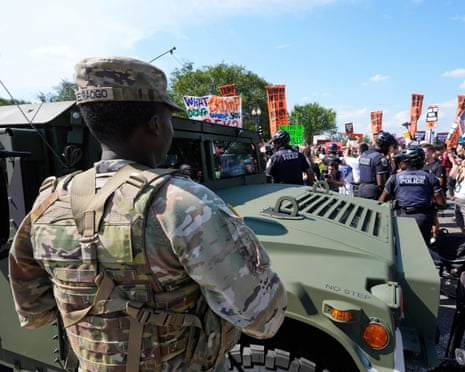
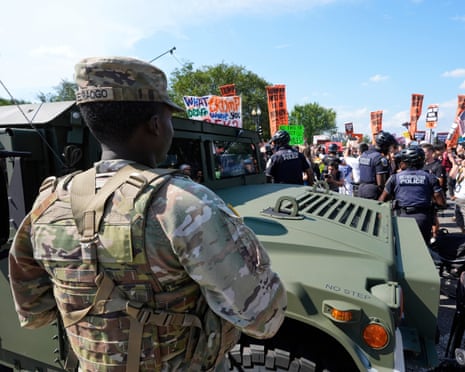
From a purely operational perspective, National Guard troops are often seen as a stop-gap measure to support law enforcement during emergencies. In Washington, they have been tasked with crowd control and patrolling key points in the city. But what does this mean for everyday residents? The presence of military personnel in a civilian space can be both reassuring and intimidating—a duality that has contributed to the mixed reactions we see in communities across the nation.
Critics argue that the addition of external forces complicates the already tangled issues of urban security. It becomes challenging to decipher when such measures are necessary for maintaining order, and when they risk creating an atmosphere of militarization that could have long-lasting impacts on local trust and cooperation between authorities and citizens.
Community Concerns and the Response of Local Leaders
The public response to the deployment of extra troops has been as varied as it is passionate. In areas like Dupont Circle, protestors have rallied against what they call a “fascist takeover” of their city, bearing signs that declare “no military occupation.” This reaction is emblematic of broader apprehensions within communities that see the influx of Federal agents and National Guard troops as a fundamental threat to the democratic fabric of urban life.
Local organizers, such as Morgan Taylor and Jamie Dickstein, have voiced their concerns about the added risk of unchecked federal power. Their worry is not unfounded: the presence of unmarked officers and an increasing number of external law enforcement agents can lead to situations where the lines between lawful order and authoritarian control blur.
Key points of concern raised by community leaders include:
- Uncertain Accountability: With multiple authorities on the ground, it’s often difficult for citizens to know whom to hold responsible when incidents of misconduct occur.
- Potential for Escalation: The iconic images of military personnel at the National Mall and near landmarks raise the alarm that a slippery slope might lead to even greater federal control, undermining the notion of local autonomy.
- Rallying Cry for Reform: Many protestors hope that their public demonstrations will force federal authorities to scale back on aggressive crime and immigration policies—a goal that reflects broader national concerns about overreach.
These elements reinforce the idea that the current measures, however well-intended in the name of public safety, carry hidden complexities that risk unsettling the delicate balance of power between local communities and federal authorities.
Legal and Ethical Considerations in Federal Policing
Assessing the Rules of Engagement and Civil Liberties
Legally, all law enforcement actions are subject to scrutiny under both domestic and international human rights standards. When federal agents and National Guard troops engage in tasks such as crowd control and detention, several pressing legal questions arise. Are these measures consistent with established protocols? Do they respect the rights of protesters and local residents, or do they overstep boundaries that should remain under local oversight?
Beyond the legal texts, there exists a moral and ethical dilemma about the nature of government power. While the president has the authority to declare an emergency, that power should not be exercised in a manner that creates a precedent for using external force as a tool for political leverage. In evaluating this issue, it becomes important to consider several intertwined themes:
- Proportionality: Government action must remain proportional to the actual threat faced. Many critics argue that the current measures are not congruent with the real levels of violence or disorder in Washington.
- Transparency: The decision-making process behind such measures should be entirely transparent. Vague or overly broad justifications can lead to abuses of power that later tarnish public trust.
- Legal Oversight: It is essential for the judiciary to maintain a proactive role in reviewing these orders. Without sufficient checks and balances, the potential for legal missteps or infringements on basic rights increases.
As lawmakers and legal experts continue to sort out the fine points of constitutional law, it is clear that this situation is teeming with potential legal pitfalls and ethical dilemmas that need thorough examination and clear resolutions.
Future Implications: Setting a Precedent for Federal Intervention
One of the most nerve-racking aspects of the federal crackdown in Washington is the long-term legal and political precedent it may set. If the federal government is allowed to deploy extra troops at its discretion in urban centers, what message does that send to state and local governments? The expanded role of federal law enforcement in local matters might create a template that could be replicated in other cities facing political or social unrest.
Several key implications include:
| Issue | Potential Impact |
|---|---|
| State Sovereignty | An erosion of local decision-making power that could shift resources away from community-based policing. |
| Civil Liberties | Increased surveillance and militarization pose risks to free speech and the right to peaceful protest. |
| Judicial Oversight | Pressure mounts on courts to more closely monitor acts of federal overreach, potentially limiting future presidential actions. |
| Political Polarization | Deepening divisions between parties and within communities, as residents and local officials grapple with conflicting visions of governance. |
These implications are a dangerous reminder that decisions made in moments of crisis can have repercussions far beyond the immediate situation. It is crucial, therefore, that the legal community, political leaders, and citizens work together to ensure that any emergency measures remain temporary and subject to rigorous review.
Challenges in Defining “Emergency” Conditions
Interpreting the Executive Order: Emergency or Overreach?
One of the most contested issues in this debate is the interpretation of the executive order that allowed for the federalization of local police forces. According to the president’s rationale, the emergency condition was triggered by the city government’s inability to maintain public order—a point that many legal experts dispute given the current situation. With crime statistics indicating a decline in violent incidents compared to previous years, the justification for such a sweeping intervention appears, at best, questionable.
Critics argue that the executive order conflates political agendas with genuine public safety concerns. When the order is viewed in this light, it transforms from an emergency measure into what many contend is an overreach of executive power. The emergency rationale is further strained by the subsequent deployment of additional troops from other states, actions that seem to exceed what the original justification might warrant.
Comparative Analysis: When Is an Emergency Truly Justified?
Looking at past examples where similar orders were issued, one finds that emergencies must be narrowly defined and closely monitored. For these measures to stand up to legal scrutiny, they should be limited in scope and time, ensuring that normal governance quickly resumes once the crisis recedes. In contrast, the current situation has raised red flags as it appears to extend the duration and scope of federal control in an already politically charged environment.
To illustrate these differences, consider the following bullet points that outline the critical elements of a justified emergency:
- Clear Evidence of Threat: There must be undeniable evidence that a genuine threat exists, warranting extraordinary measures.
- Limited Scope: The actions taken must be narrowly tailored to address only the specific issues at hand.
- Time-Bound Measures: Emergency powers should be temporary, with clear triggers for deactivation once stability returns.
- Oversight and Accountability: Continuous oversight by the judiciary and legislative bodies is essential to prevent abuses.
These points emphasize that while emergencies necessitate rapid action, they should not become a catch-all justification for fundamentally altering the balance between federal and local power. When emergency measures overstay their welcome, the very democratic principles they are meant to protect are risk being undermined.
The Role of National Guard Troops in a Democratic Society
State Contributions and the Question of Civilian Oversight
The decision by governors in West Virginia, South Carolina, and Ohio to send National Guard troops to Washington is emblematic of the complicated relationship between state contributions and federal responsibilities. While these governors have articulated their support for the president’s plan as a necessary move to restore order, their actions raise important questions about civilian oversight and the appropriate limits of military involvement in public security.
It is essential to appreciate that the National Guard is typically meant to serve as a local reserve force, activated during emergencies when civilian agencies are overwhelmed. However, when they become a constant presence on the streets of a major metropolis, the fine details of their role must be defined precisely. Without clear guidelines, there is a risk that military practices could seep into civilian life, leading to an environment where every misstep could escalate tensions further.
Balancing Military Support with Democratic Norms
In an ideal scenario, the involvement of National Guard troops should be limited to actions that support civilian efforts rather than replacing local law enforcement. The current situation, however, sees these troops playing an active role in tasks such as crowd control and patrolling high-profile locations. This not only blurs the line between military and civilian functions but also raises concerns about accountability. When unmarked officers and tightly coordinated federal agents become involved in local security, the oversight mechanisms that typically protect citizens’ rights may become strained.
Policymakers and community advocates alike stress the need for a balanced approach—one that preserves the essential role of military support in crises while maintaining robust civilian control over law enforcement operations. Such a balance is critical to ensuring that federal intervention remains an exception rather than a new norm.
Repercussions on American Democracy and Public Trust
Impact on Voter Confidence and Civic Engagement
The unfolding scenario in Washington poses a broader question: how do these federal actions affect the fundamental trust between citizens and their government? When state and federal powers begin to converge in ways that sideline local decision-making, voter confidence can be deeply undermined. Brookings Institution scholars and other policy experts have warned that such shifts could lead to long-term erosion of democratic principles, where government actions are seen as top-down mandates rather than the product of community deliberation.
Many residents of Washington and other urban centers fear that this overbearing approach could stifle civic engagement, turning public spaces into arenas dominated by security apparatuses with limited accountability. In democracy, it is super important for communities to have a voice in how they are policed and governed. The intrusion of external forces into local governance not only affects immediate safety but also influences how citizens view the legitimacy of their local institutions.
The Importance of Public Accountability in Crisis Management
In times of national crisis, accountability mechanisms are essential for preserving democratic norms. Agencies tasked with ensuring public safety must remain transparent about their activities and decisions. The current deployment of National Guard members in Washington should, therefore, be accompanied by detailed public reports and independent reviews. Without transparency, the risk of unchecked abuses of power becomes all too real.
Some of the key steps toward public accountability include:
- Regular Public Briefings: Officials should provide clear, frequent updates to help citizens understand the scope and rationale behind federal measures.
- Third-Party Oversight: Independent bodies should be tasked with monitoring the use of emergency powers, ensuring all actions are within legal bounds.
- Clear Exit Strategies: Emergency measures must have defined timelines or conditions for deactivation, so residents know when normalcy will return.
These steps are designed to help rebuild and maintain public trust. They also serve as a reminder that while security is essential, it cannot come at the expense of democratic accountability and individual rights.
The Road Ahead: Ensuring a Just Balance of Power
Strategies for Reclaiming Local Control
Moving forward, the debate surrounding the deployment of National Guard troops in Washington forces us to consider how local jurisdictions can reclaim and secure their governing rights, even in the face of robust federal initiatives. Local leaders and community advocates need to work together to craft responses that ensure that while public safety is enhanced, the voice of the local citizenry is not silenced.
Some practical strategies include:
- Legal Challenges: Engaging in measured legal actions to review the scope and legality of federal orders can help set important judicial precedents.
- Community Forums: Organizing town hall meetings and public discussions allows citizens to air their concerns and influence policy decisions.
- Policy Reforms: Advocating for legislative changes that reinforce the separation between federal enforcement and local governance can offer long-term solutions.
By working through these strategies, communities can figure a path that reasserts local control without completely rejecting necessary support during emergencies. This balanced approach is crucial for adapting to the ever-changing landscape of public safety in a democracy.
The Role of Judicial Review in Protecting Democracy
The courts have a critical role to play in ensuring that federal measures do not veer into the territory of overreach. Judicial review provides a critical check on executive power and helps guarantee that emergency measures, however nerve-racking they may seem during their enactment, do not permanently alter democratic institutions. Courts can review decisions to ensure that the subtle parts of constitutional law are upheld, offering a safeguard against potential abuses.
In recent cases, legal challenges have led to the rollback or revision of some federal orders that were deemed to overstep established limits. As discussions continue in legal circles, it is essential that these issues remain under the constant scrutiny of independent judicial processes.
Conclusion: A Call for Thoughtful Reflection and Balanced Action
Reflecting on the Fine Points of Federal and Local Relationships
As we reflect on the events unfolding in Washington, we must recognize that the deployment of National Guard troops from Republican-led states is not simply a matter of security logistics. It is a reflection of deep-seated political conflicts, legal ambiguities, and concerns over the direction in which American democracy might be heading. While proponents of these measures argue that they are essential for restoring order and addressing specific challenges, detractors see them as an unsettling expansion of federal power—a move that could have lasting consequences on local autonomy.
In our current political climate, where every decision is loaded with issues and small differences in policy can have far-reaching implications, it is critical that we take a step back and consider the long-term effects. The added presence of external forces in Washington is not an isolated event; rather, it is part of a broader debate about the balance of power that defines American governance.
Moving Forward: Emphasizing Transparency and Community Resilience
The state contributions and federal mandates currently in play should serve as a catalyst for one fundamental reexamination of American democracy. Transparency in decision-making, robust public oversight, and a commitment to local autonomy are not just bureaucratic niceties—they are the super important building blocks of a healthy democratic society.
As we move forward, community leaders, legal experts, and policymakers must come together to chart a course that preserves the delicate balance between public safety and the protection of civil liberties. In doing so, they will not only address the immediate challenges salient in Washington, D.C., but will also set a precedent for how future emergencies are managed without infringing on the rights and autonomy of local communities.
A Final Word on Our Democratic Future
The current federal intervention—characterized by the additional deployment of National Guard troops, increased federal law enforcement presence, and legal battles over jurisdiction—is more than a momentary flashpoint. It is a defining instance that calls for a thoughtful, balanced approach. By looking into the legal foundations, political motivations, and public reactions, we gain a clearer understanding of how our democratic institutions are being tested.
Now, more than ever, it is crucial for all Americans to remain engaged, to question authority when needed, and to insist on transparency and accountability from both local and federal governments. Only through a collaborative and informed dialogue can we hope to steer through these nerve-racking times and ensure that the guiding principles of democracy—local control, individual liberty, and balanced power—are preserved for future generations.
In conclusion, while the current actions taken by federal and state authorities in Washington are portrayed as emergency responses to issues of crime and disorder, they also serve as a powerful reminder of the delicate twists and turns inherent in governing a vast and diverse nation. It is incumbent upon us as citizens, legal analysts, and community members to remain vigilant, to dig into these tangled issues, and to work together in crafting a future where security measures do not erode the democratic freedoms we hold dear.
As the debates continue in courtrooms, city halls, and living rooms across the country, let us commit ourselves to a dialogue that is as transparent as it is respectful, as measured as it is decisive. The balance between federal authority and local autonomy, as well as the protection of civil liberties, must remain at the forefront of our collective conscience. Only through a mindful negotiation of these challenges can we ensure that our democracy remains robust, fair, and just.
Ultimately, the events in Washington are a call for careful reflection on the future of American governance. It is a reminder that while security is essential, the mechanisms we adopt to ensure it must never compromise the foundational values of democracy. We owe it to ourselves—and to future generations—to work together in finding that just balance, to celebrate transparency, and to insist on accountability at every level of government.
Originally Post From https://www.kawc.org/npr-news/2025-08-17/three-republican-led-states-to-send-hundreds-of-national-guard-troops-to-washington
Read more about this topic at
Trump’s domestic troop deployment tests the limits of a …
Trump’s Domestic Troop Deployment Tests the Limits of a …