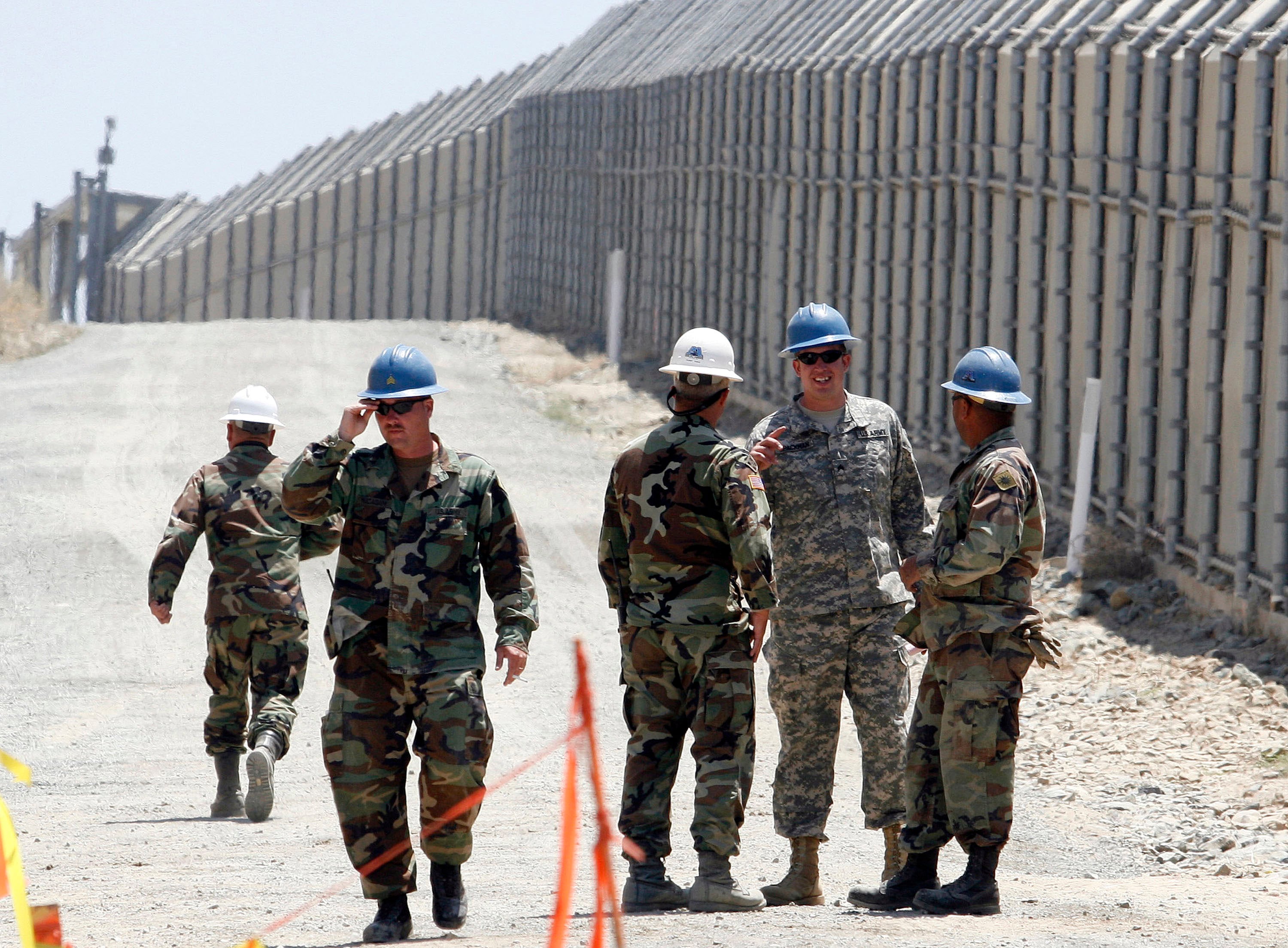
Obama’s Consideration to Deploy National Guard Troops: A Legal Perspective
The recent discussion by President Barack Obama about the potential deployment of National Guard troops to the U.S.-Mexico border has sparked a debate that is as legally delicate as it is politically charged. As a legal observer on these matters, I take a closer look at the proposals and consider the legal implications, policy subtleties, and responsibilities inherent in such an action. The president’s comments and the subsequent requests from state leadership in Arizona and discussions in Texas are more than just news hooks – they present a series of challenging legal and operational issues that demand a balanced and informed legal analysis.
At its core, the debate revolves around how to address escalating violence on the southern border while maintaining the careful balance between national security and the protection of civil liberties. The president’s careful phrasing – emphasizing that he wishes to avoid “militarizing” the border – underscores the tricky parts of using military resources in a law enforcement role, drawing attention to the tangled issues that legal experts must consider.
Historical Context and Evolution of Border Security Policies
The issue of deploying military personnel for border security is not entirely new. The last major federal National Guard mission along the U.S.-Mexico border, known as Operation Jump Start, highlighted the strategic role that citizen-soldiers and airmen could play in backing up the U.S. Border Patrol. Over the course of that two-year mission, thousands of National Guard members contributed to non-law-enforcement functions, ranging from aviation support to technical and logistical roles.
This historical precedent is informative because it clarifies the limited scope of military assistance in domestic affairs. Past deployments were structured in such a way that they avoided directly affecting law enforcement practices, keeping clear the constitutional and statutory lines between military involvement and domestic policing. The challenge now is to ensure that any new initiative remains within these limits while still addressing escalating border violence.
Legal Framework for Military Involvement in Domestic Security
When considering the use of National Guard troops in a domestic context, particularly on the U.S.-Mexico border, the legal framework becomes a patchwork of statutory guidelines, constitutional limits, and precedent-setting judicial decisions. The president’s remarks point to an exploration of whether National Guard deployments would make strategic sense in certain circumstances, but there are several legal considerations that must be addressed before any such step is taken.
One of the key legal questions centers on the Posse Comitatus Act, a statute that limits the ability of federal military forces to engage in domestic law enforcement. Although National Guard units have a dual state-federal status and can be mobilized under different legal authorities, any action that takes on a direct law enforcement role must be scrutinized to avoid infringing on constitutional rights. Critics of a heightened military presence argue that it might blur these legal boundaries, raising concerns related to civil liberties and due process.
To help understand the legal landscape, consider the following points:
- Statutory Limitations: The Posse Comitatus Act and related regulations form the backbone of legal restrictions regarding military involvement in domestic policing.
- Dual-Status Nature: National Guard units can be activated by both state governors and the president, but their roles vary significantly depending on the authority used.
- Role Definition: Past deployments have clearly defined roles, such as technical and logistical support, which do not overlap with direct enforcement duties.
These bullet points emphasize the importance of knowing the fine points of this legal issue, as each aspect has both strategic and constitutional implications.
State Versus Federal Authority: A Subtle Balance
The dynamics of state and federal authority come into sharp focus when looking at the requests coming from states such as Arizona and Texas. The governor of Arizona, for example, has requested an additional 250 National Guard soldiers to support operations along its lengthy border with Mexico. Similarly, Texas officials have echoed the sentiment, citing the necessity for extra support to tackle violence associated with drug gangs and transnational crime syndicates.
This division of authority highlights a few critical points:
- State Autonomy: Governors have the prerogative to mobilize their National Guard forces, particularly in response to localized security concerns.
- Federal Coordination: When such actions entail broader security implications, the federal government’s involvement becomes essential to ensure consistency with national law and to avoid conflicts between state and federal initiatives.
- Coordination Risks: Miscommunication or mismanagement between state and federal agencies could lead to overlapping responsibilities, which in turn might raise legal questions about accountability and liability.
Understanding these broken-down points is critical in appreciating the degree of care that must be exercised when state.requests edge into areas previously handled predominantly by federal agencies. The potential tension between state-led initiatives and federal oversight is yet another knotty issue that must be systematically untangled.
Potential Civil Liberties Implications and Public Concerns
A key concern that arises from any increased military presence, particularly in border areas, is the impact on civil liberties. The president’s comments, though meant to be measured, have raised questions about the delicate balance between ensuring public safety and upholding constitutional protections for citizens.
Critics warn that deploying military personnel in roles that touch upon law enforcement could lead to unintended consequences, such as disproportionate scrutiny and reduced transparency in policing practices. These outcomes might be especially problematic in regions where strong community-police relations are critical to maintaining public trust.
To encapsulate the potential civil liberties effects, we can identify several areas of concern:
- Surveillance and Privacy: Military involvement might lead to enhanced surveillance measures, which can conflict with individuals’ rights to privacy.
- Due Process: The application of military procedures in civilian areas brings into question proper legal recourse, given that military protocols differ significantly from civilian judicial processes.
- Risk of Overreach: Without rigorous oversight, the temporary deployment of military resources has the potential to become more permanent, leading to a gradual erasure of civilian oversight over public security functions.
Each bullet point here dig into the subtle details related to public trust. They remind us that every decision involving national security not only adheres to strategic considerations but must also maintain the legitimacy conferred by constitutional norms.
Operational Challenges and Military Strategy Considerations
When considering additional National Guard deployments to the border, military operational challenges must also be top-of-mind. The significance of the previous Operation Jump Start is instructive in showing how National Guard units have been effectively integrated into border security. However, there are distinct differences between that previous operation and any new mission that might be undertaken.
Key operational aspects include:
- Role Differentiation: Whereas past missions focused on non-lethal support roles, any new initiative must clarify whether troops will take on similar supportive functions or if their mandate will extend to more direct intervention.
- Resource Allocation: The availability of adequate resources—ranging from transportation to technical equipment—is essential in ensuring that National Guard units can sustain prolonged deployments without jeopardizing their primary responsibilities at home.
- Integration with Civil Agencies: A seamless interface between military support and civilian law enforcement agencies is critical to ensure that efforts to secure the border are not hindered by jurisdictional overlaps or conflicting procedures.
A tabular overview can help underscore these challenges:
| Operational Aspect | Past Deployment (Operation Jump Start) | Potential New Mission |
|---|---|---|
| Role Demarcation | Non-law enforcement support | Potential overlap with direct enforcement |
| Resource Allocation | Well-defined logistical support | Enhanced needs for extended operations |
| Coordination with Agencies | Clearly delineated boundaries | Risk of blurred lines between military and civil roles |
This table illustrates the fine shades and little twists that differentiate between what has been done before and what could be on the horizon. Each line item stresses the necessity of carefully managing the multifaceted role of the National Guard in domestic contexts.
Analyzing the President’s Statements: Policy and Legal Messaging
One of the most striking elements in the recent dialogue is the careful language chosen by President Obama. Despite the pressing issues at the border and the loud calls by some state leaders, the president’s commentary reveals hesitation in immediately committing to a deployment strategy. He explicitly noted that he has not yet drawn any conclusions, and that there is no single “tipping point” which has just triggered this discussion.
This measured language is critical for several reasons:
- Avoiding Premature Decisions: By stating that no definitive conclusions have been reached, the administration leaves room for further analysis and consultation with both legal experts and military advisors.
- Maintaining Flexibility: The careful wording ensures that policy responses remain flexible to adapt to evolving scenarios at the border, thus not locking the government into a singular course of action.
- Balancing Political Pressure: The president navigates a nerve-racking political landscape by balancing state concerns with federal priorities, ensuring that quick decisions do not undermine long-standing legal standards or create new controversies.
This discussion also highlights the importance of language in political and legal discourse. By employing cautious phrasing, the administration signals its commitment to upholding established principles while still being responsive to the pressures generated by regional insecurity. For legal scholars, such a stance is appreciated because it reaffirms the idea that law and policy must be adaptable yet grounded in the foundational ideals of constitutional governance.
Comparative Analysis: U.S. Border Security and International Practices
Looking beyond American borders, the challenges of managing migration and cross-border violence are not unique to the United States. Several nations have grappled with similar issues, adopting varied approaches in their use of military and law enforcement resources. This comparative analysis offers important clues for how the U.S. might manage its own border security challenges.
For instance, many European countries have developed mechanisms that integrate military support with civilian policing responsibilities while strictly maintaining clear legal boundaries. In contrast, some Latin American nations have experienced overlapping responsibilities between military and police forces, leading to public unrest and legal disputes. The success—or failure—of these models provides a rich ground for learning the subtle details of optimal border security management.
Key lessons from international practices include:
- Clear Role Definition: Ensuring that military personnel do not inadvertently assume law enforcement responsibilities is crucial to maintaining legal norms.
- Robust Oversight Mechanisms: Independent oversight bodies can help prevent misuse of military power and ensure accountability.
- Community Engagement: Public support, built on transparency and consistent legal practices, is essential in mitigating the risks associated with increased military presence in domestic settings.
These insights help illuminate the possible paths that lawmakers and administrators might take in designing a mission that is both effective and respectful of the legal framework.
Implications for Community Safety and Civil Rights
The broader implications of deploying National Guard troops on the border extend beyond immediate security concerns. Community safety, trust in law enforcement, and the long-term protection of civil rights all hinge on how government agencies manage such deployments. There is a legitimate worry that an increased military presence could signal a shift toward a securitized paradigm that might not fully account for the rights of every citizen.
In communities on both sides of the border, the potential for increased surveillance and more intrusive security measures forms a source of considerable anxiety. Residents fear that extra military involvement could lead to quick-fix measures that sidestep community input and compromise long-standing legal safeguards.
To better understand the stakes, consider the following impacts:
- Enhanced Public Safety: Proponents argue that a visible military presence could deter criminal activities and reduce drug trafficking.
- Risk to Civil Liberties: Critics counter that such measures might lead to wrongful detention, profiling, or other breaches of civil rights.
- Trust Deficit: A marked increase in military oversight could undermine the trust between civil communities and both state and federal government agencies.
The nuances—those hidden complexities—of this debate make it essential to balance security benefits against the inevitable challenges of maintaining a free and open society. Any policy direction must be formulated with the full engagement of legal experts, community leaders, and civil rights advocates to ensure that security measures do not erode the fundamental values of justice and liberty.
Challenges in Integrating Military Support with Civil Law Enforcement
One of the most contentious issues in this discussion is finding the right balance between military support and civilian law enforcement responsibilities. Although the National Guard can offer key support functions, the legal system mandates that military personnel remain distinctly separate from the direct exercise of police powers.
Several challenges must be considered:
- Jurisdictional Overlap: Without clear guidelines, there could be areas of conflict where military actions encroach upon the roles of civilian agencies.
- Accountability Mechanisms: Military personnel deployed in domestic environments need strict oversight to ensure that any actions taken are in line with constitutional protections.
- Chain of Command: Maintaining a clear and efficient command structure is complex when state and federal authorities are both involved. This structure must be designed to ensure that decisions are made transparently and that accountability is maintained at every level.
A comprehensive approach to these challenges would require:
- Enhanced joint training programs for military and civilian agencies to foster mutual understanding.
- Legislative reforms that clarify the parameters under which the National Guard can support domestic law enforcement without overstepping constitutional boundaries.
- Establishment of independent oversight bodies capable of reviewing and monitoring actions taken on the border.
These measures would pave the way for a more efficient integration of military resources while safeguarding the public’s legal rights. The goal is to figure a path forward that respects both the operational requirements of border security and the legal framework that protects civil liberties.
Economic and Social Considerations at the Border
The legal debates and operational decisions around National Guard deployments should not obscure the broader economic and social implications of heightened border security. Communities near the border face a variety of challenges—from economic instability caused by cross-border crime to social fragmentation resulting from increased militarization.
In many border regions, the local population is caught between the need for secure communities and the potentially off-putting presence of military personnel. This situation can lead to a nerve-racking environment where trust between citizens and government agencies is undermined, complicating law enforcement efforts even further.
A closer look at the economic and social dimensions reveals three main areas of concern:
- Impact on Local Businesses: Prolonged military involvement and heightened security measures could deter investment and disrupt local commerce.
- Community Relations: The presence of armed forces may create an atmosphere of tension, affecting everyday interactions between residents and local law enforcement.
- Long-term Social Effects: Persistent security measures might contribute to a feeling of being constantly monitored, which could erode the sense of personal freedom and community trust.
A table summarizing these points might appear as follows:
| Factor | Potential Impact |
|---|---|
| Local Businesses | Reduced investments, disrupted commerce, operational uncertainties |
| Community Relations | Tension between citizens and security forces, fear of overreach |
| Social Environment | Sense of continuous surveillance, erosion of trust, increased suspicion |
Each element in the table highlights how intertwined economic and legal challenges are when formulating a proactive border security policy. It is essential that legislators and administrators consider these social and economic twists as they shape future policies.
Policy Recommendations and Future Directions
While the debate over National Guard deployments continues, it is clear that any future action will need to be grounded in rigorous legal analysis, clear operational guidelines, and active community engagement. The ultimate goal is to secure the border without sacrificing the essential liberties that define American society.
Here are some key policy recommendations for moving forward:
- Clear Legal Mandates: Establish statutory guidance that explicitly outlines the role of National Guard units in domestic settings without infringing on civilian law enforcement domains.
- Enhanced Oversight: Create independent oversight bodies to monitor the use of military personnel in border regions, ensuring that actions remain within strict constitutional parameters.
- Joint Training and Coordination: Develop robust programs that encourage inter-agency collaboration between military and civilian law enforcement, facilitating smoother integration and better communication.
- Community Inclusion: Engage local communities in the conversation, providing channels for feedback and ensuring that security measures are both transparent and accountable.
- Periodic Legal Review: Implement regular reviews of the legal frameworks guiding border security to accommodate evolving circumstances and emerging challenges.
These recommendations, while not exhaustive, offer a roadmap for policymakers who must negotiate the tangled issues of security, legal compliance, and civil rights. It is imperative that government officials, legal scholars, and community leaders work together to manage the twists and turns associated with this sensitive topic.
Reflections on the Intersection of Law, Policy, and National Security
The discourse surrounding the potential deployment of National Guard troops to the U.S.-Mexico border represents a crossroad where law, policy, and national security intersect. Each decision made in this domain has far-reaching implications not only for immediate border security but also for the long-term legal standards that govern civilian oversight of military involvement.
For legal professionals, the discussion is a call to carefully poke around the layers of statutory provisions, constitutional principles, and ethical considerations that come into play. It is essential to get into the details and ensure that any policy response is as balanced as it is effective. The pursuit of national security must never overshadow the commitment to preserving the pillars of justice, due process, and civil liberties.
This reflective stance, characterized by careful language and measured steps, is vital for ensuring that the actions taken today do not produce unforeseen legal burdens tomorrow. The president’s uncertainty about a definitive tipping point reflects the ongoing struggle to balance competing interests in an area that is loaded with both strategic and legal challenges.
State Leadership and the Strategic Imperative for Border Security
The voices of state leaders, such as Arizona’s Gov. Jan Brewer and Texas’s Gov. Rick Perry, are critical in shaping the national dialogue on border security. Their calls for additional National Guard support underscore a shared sense that the situation at the border is not only tense but also riddled with operational challenges.
From a legal standpoint, state leadership must work in tandem with federal authorities to ensure that any deployment preserves the essentials of local governance while aligning with national security objectives. This dual mandate places a super important emphasis on finding your way through overlapping jurisdictions and ensuring that every tactical decision adheres to well-defined legal boundaries.
A few aspects of state and federal collaboration worth noting are:
- Unified Command Structures: Clearly defined lines of authority will help alleviate the risk of jurisdictional overlap and ensure that rules are applied uniformly.
- Transparent Communication: Both state and federal agencies should commit to regular, transparent communication to preempt any misunderstandings that might arise from dual deployments.
- Local Input: State governments are in a unique position to gauge community sentiment, providing key feedback that should inform any larger federal strategy.
This cooperative spirit is critical for steering through the challenging legal and operational bits that this proposal presents. Without such coordination, even well-intentioned actions could lead to unforeseen legal entanglements and community discontent.
Concluding Thoughts: Balancing Security with Constitutional Principles
The debate on whether to deploy National Guard troops to the border encapsulates a tension that is both immediate and far-reaching. On one hand, there is a legitimate need to address issues of drug trafficking, gang violence, and illicit cross-border activities. On the other hand, this need must always be balanced against the larger imperative of preserving constitutional protections and the fundamental rights of American citizens.
The president’s cautious approach – acknowledging the presence of dangerous criminal elements while stressing that a decision has not been finalized – is emblematic of how complex, and sometimes intimidating, policy decisions can be. Legal experts, military strategists, and community leaders must all come together to find your way through the confusing bits, tangled issues, and nerve-racking decisions that lie ahead.
The path forward requires ongoing dialogue, careful legal analysis, and sustained commitment to lawful, transparent governance. In this era of rapid change, where national security concerns meet the equally important need for civil liberties, a balanced, comprehensive strategy is not merely desirable—it is absolutely essential.
In closing, while the discussion continues and various state and federal authorities weigh their options, it is vital that every decision is informed by robust legal standards and a keen understanding of both the strategic and human dimensions involved. Only by learning from past experiences, embracing collaborative oversight, and committing to continuous review can the government ensure that any action taken in the name of border security upholds the cherished values of justice and accountability.
As we look ahead, it will be critical for policymakers to adopt a multi-faceted approach that blends operational efficiency with constitutional fidelity. The decisions made in the coming months will undoubtedly shape the legal landscape not only at the border but across the nation, setting precedents for how future challenges are met in a manner that balances security imperatives with the enduring principles of American democracy.
Ultimately, the challenge before us is not simply one of enforcing borders but of preserving the delicate, indispensable balance between state power and individual rights. As the debate unfolds, we must keep at the forefront the notion that every policy choice carries with it the responsibility to protect the legal and social fabric that underpins our society.
The considerations presented here—ranging from operational challenges and legal mandates to social impact and state-federal cooperation—form a mosaic of issues that together demand a thoughtful and measured response. This editorial, while not providing all the answers, underscores the necessity of navigating these rough legal waters with both caution and determination. By doing so, we can chart a course that secures our borders without compromising the essential freedoms that define our nation.
In the end, whether or not a new mission will be formally approved, the discussion itself is a vital reminder of the complex interplay between law, policy, and national security—a conversation that is likely to continue as circumstances evolve along the ever-important U.S.-Mexico border.
Originally Post From https://www.dvidshub.net/news/519515/obama-considers-deploying-national-guard-us-mexico-border
Read more about this topic at
Border Security
Support for Stronger, More Effective Border Security